 English
 Indonesia

NABIRE – The chance to work and holiday in Australia is now wider open for
young people in Central Papua. The Mutiara Hitam Papua Foundation (Yayasan
Mutiara Hitam Papua) held an information session in Nabire in November 2026 on
the Work & Holiday Visa (Subclass 462), aimed at young people aged 18–30.
The session gave
participants the full picture: eligibility, costs, the new 2026 ballot system
and how to avoid scams. The message was clear: start preparing now, because
sorting out documents from Nabire can take months.
The session
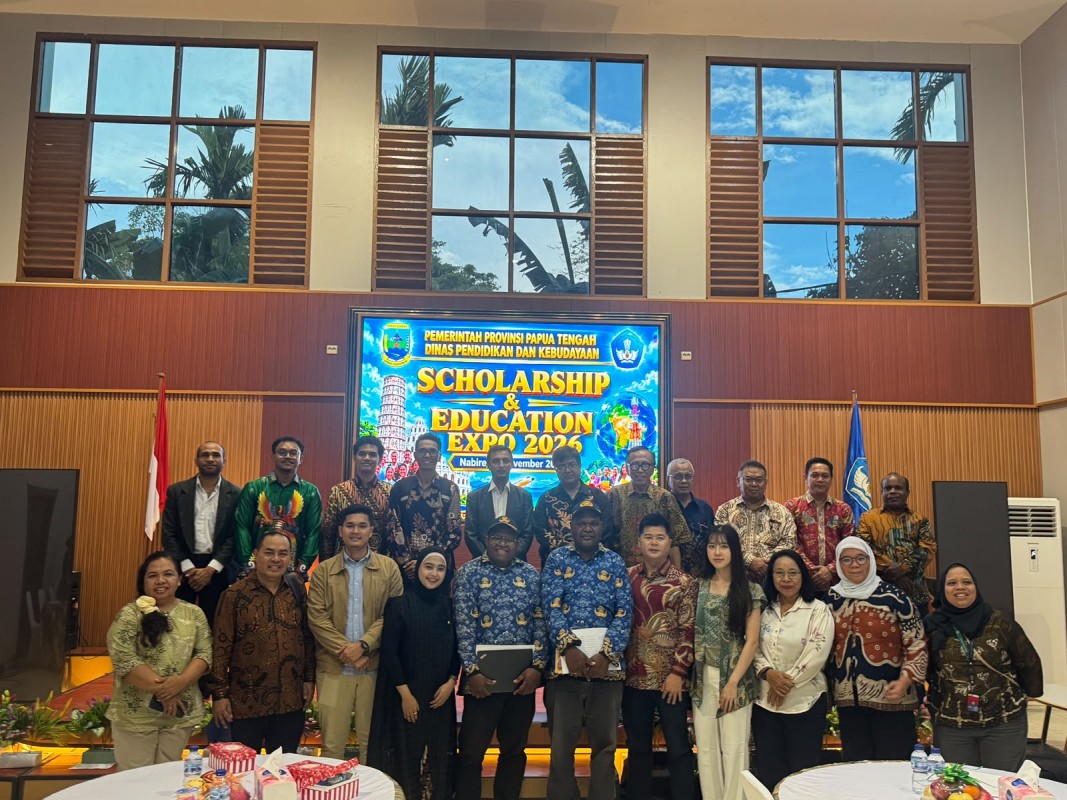
shares the spirit of the Central Papua Education & Scholarship Expo 2026,
held by the Central Papua Provincial Government on 17–18 November 2026. The
Expo brought domestic and international scholarship sponsors directly to
Central Papua. Together, both efforts open the way for young Papuans to study
and work abroad.
The 462 visa is
a temporary visa for Indonesians aged 18–30 to holiday in Australia while doing
short-term work to fund the trip. Visa holders may live, travel and work
anywhere in Australia for 12 months, and leave and re-enter the country as
often as they like. They can take casual or full-time work of any kind, and may
study or train for up to 17 weeks.
For Nabire
youth, the benefits are immediate. Australian wages are among the highest in
the world, so participants can save. Their English improves every day. They
gain hands-on skills in farming, fishing, tourism and hospitality, sectors
Nabire also depends on. When they return, they bring savings, experience and
contacts to help build Papua.
Applicants must
meet eight requirements. They need an Indonesian passport valid for the whole
trip, must be aged 18–30 on the day they apply, and must hold a diploma or
degree, or have completed at least two years of university. Their English must
be at least functional, equivalent to an average IELTS score of 4.5.
Applicants must
also have savings of about AUD 5,000 plus the cost of a return ticket, pass a
medical check and hold a police certificate (SKCK). In addition, they may not
bring dependent children and must never have held a 417 or 462 visa before.
The fee for a
first visa is AUD 840, or about Rp 10.5 million, while the savings to be shown
are equal to about Rp 62.5 million. Participants should also budget for an
IELTS or PTE test and travel to a test city, a passport, SKCK, translated
certificates, a health check at an Australia-approved clinic, flights, and
living costs for the first few weeks. These figures use a rate of about Rp
12,500 per AUD as of November 2026 and may change at any time.
2026 also brings
a big change. The first-come, first-served SDUWHV system is being replaced by a
random draw, or ballot. Indonesia's quota remains 5,000 first visas per year,
and every eligible applicant has an equal chance.
Applicants
simply register in ImmiAccount during a short registration window. After the
draw, those selected are invited to lodge a visa application before a deadline.
The registration date has not been announced and is expected later in 2026, and
old SDUWHV letters no longer give any priority.
That is why
Nabire youth are urged to prepare now. Getting a passport, taking an English
test, and collecting and translating documents such as diplomas, transcripts,
bank statements and SKCK can take months from Nabire. After that, participants
register for the ballot as soon as it opens, apply for the visa and take the
health check if selected, and fly only once the visa is granted. In the
meantime, they should make sure they apply before turning 31, practise English
every day and save towards AUD 5,000 or more.
In Australia,
the minimum casual wage for adults since 1 July 2026 is AUD 33.05 per hour, or
about Rp 413,000. Common jobs include farming and harvest, cafés and
restaurants, hotels and tourism, and cleaning and warehouses. Participants are
reminded to get a Tax File Number and keep every payslip. Employers must pay
superannuation (retirement savings) on top of wages, and workers can usually
stay a maximum of six months with one employer.
The visa can
also be extended to a total of three years. To qualify, holders must do
"specified work" in regional or northern Australia: three months in
the first year to qualify for a second year, then six months in the second year
to qualify for a third. Examples include farming and harvest, fishing and
pearling, and tourism and hospitality in remote areas. Second and third visas
have no cap and cost AUD 1,000.
The Mutiara
Hitam Papua Foundation also warned Nabire youth not to fall for brokers'
promises. No agent can guarantee a visa or a ballot place, because the draw is
random. Participants are asked to use only the official websites
immi.homeaffairs.gov.au and imigrasi.go.id, never pay anyone for a "job
guarantee" or to "skip the queue", check that any agent they use
is MARA-registered, and not buy flights until their visa is granted in writing.
The same spirit
drove the Central Papua Education & Scholarship Expo 2026, held on
Tuesday–Wednesday, 17–18 November 2026. The Expo breaks with the old pattern,
in which the government funded only a handful of selected students to go
elsewhere in Indonesia or abroad. Now, under the Governor of Central Papua's
policy, domestic and international scholarship sponsors are being brought into
the province so they can reach many more promising young people.
"Improving
the quality of human resources through higher education is a long-term
strategic investment in realising the Golden Indonesia 2045 vision and
accelerating development in Central Papua Province," said Nurhaida, Head
of the Central Papua Provincial Office of Education and Culture.
According to
Nurhaida, young talent in Central Papua has faced three obstacles. First,
scholarship information is scattered and hard to reach for children in the
highland regencies. Second, students have never met scholarship providers in
person, so they do not know the real requirements. Third, selection standards
such as TOEFL/IELTS certificates, motivation letters and research proposals
have been a high wall.
To close these
gaps, the Expo serves as a one-stop service combining an exhibition, education
and mentoring, while connecting prospective students directly with official
representatives of scholarship donors. First priority goes to boarding school
students in every regency, seen as disciplined and used to living
independently, before the programme widens to regular schools.
The Expo rests
on four pillars: continued study for graduates of the Central Papua Teacher
Education College (KPG) at teacher-training universities (LPTK) through to a
bachelor's degree and pre-service teacher certification (PPG Prajabatan); fully
funded quota scholarships from overseas sponsors in STEM, tourism technology
and foreign languages; regular domestic and international scholarships; and
Earn & Learn scholarships, with orientation on jobs and internships during
study.
For the first
pillar, the Central Papua Provincial Office of Education and Culture invited
seven leading LPTK. Universitas Negeri Makassar prepares special-needs (SLB)
teachers. Universitas Pendidikan Indonesia Bandung, Universitas Negeri
Yogyakarta and Universitas Negeri Jakarta prepare early childhood, kindergarten
and primary teachers. Universitas Kristen Satya Wacana Salatiga, Unika Atma
Jaya Jakarta and Universitas Muhammadiyah Malang prepare primary teachers.
From 2026, KPG
admissions are handled directly by the Office with two strict criteria: good
academic results, and passing a psychological test of a calling to teach, which
checks dedication and the mental resilience to serve in the regions. The policy
follows Law No. 14 of 2005 on Teachers and Lecturers, which requires teachers
to hold a bachelor's degree in education, proven professional competence and
professional certification. It also responds to teacher shortages in remote
areas caused by security problems and conflict, and by teachers moving into
administrative posts.
The Expo also
introduced fully funded scholarships from partner countries such as India,
China, Japan and Korea, with the regional government preparing people who
master each country's language. India offers bachelor's scholarships in STEM,
while China offers scholarships in technology, drone aviation, agricultural
processing engineering and tourism, including the chance to work at
Chinese-owned industries in Indonesia. Regular global scholarship programmes
also come with orientation on legal part-time work during study.
"By
bringing donor institutions, embassies and seven LPTK directly to Central Papua
Province, we hope the children of Central Papua will have the widest possible
opportunity to break through to global higher education and build a bright
future for the region," Nurhaida said.
Visa information
in this article was checked on 10 November 2026. Because rules can change,
readers should always confirm on the official websites immi.homeaffairs.gov.au, indonesia.embassy.gov.au, imigrasi.go.id and fairwork.gov.au. (*)
Add New Comment