 English
 Indonesia

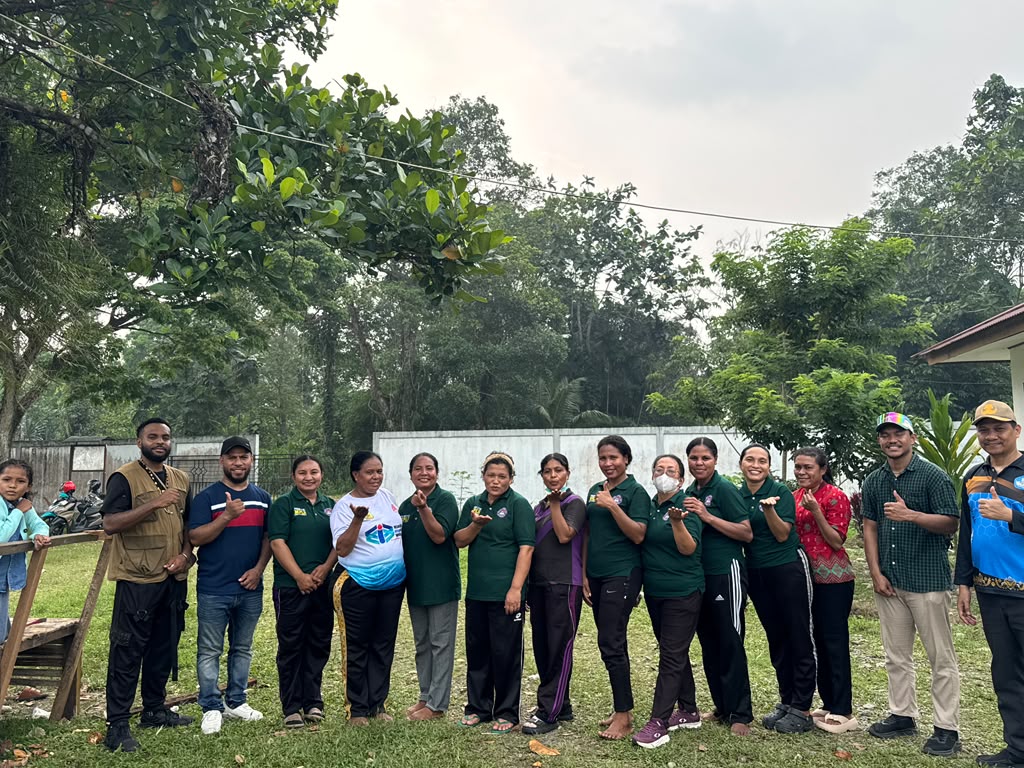
The Timika Tutor Team from the Mutiara Hitam Papua
Foundation (YMH Papua) shares inspiring stories and demonstrates Contextual
Teaching and Learning (CTL) at SMP Negeri 9 Mimika, an innovative school that
continues to learn and grow in a conflict-affected area.
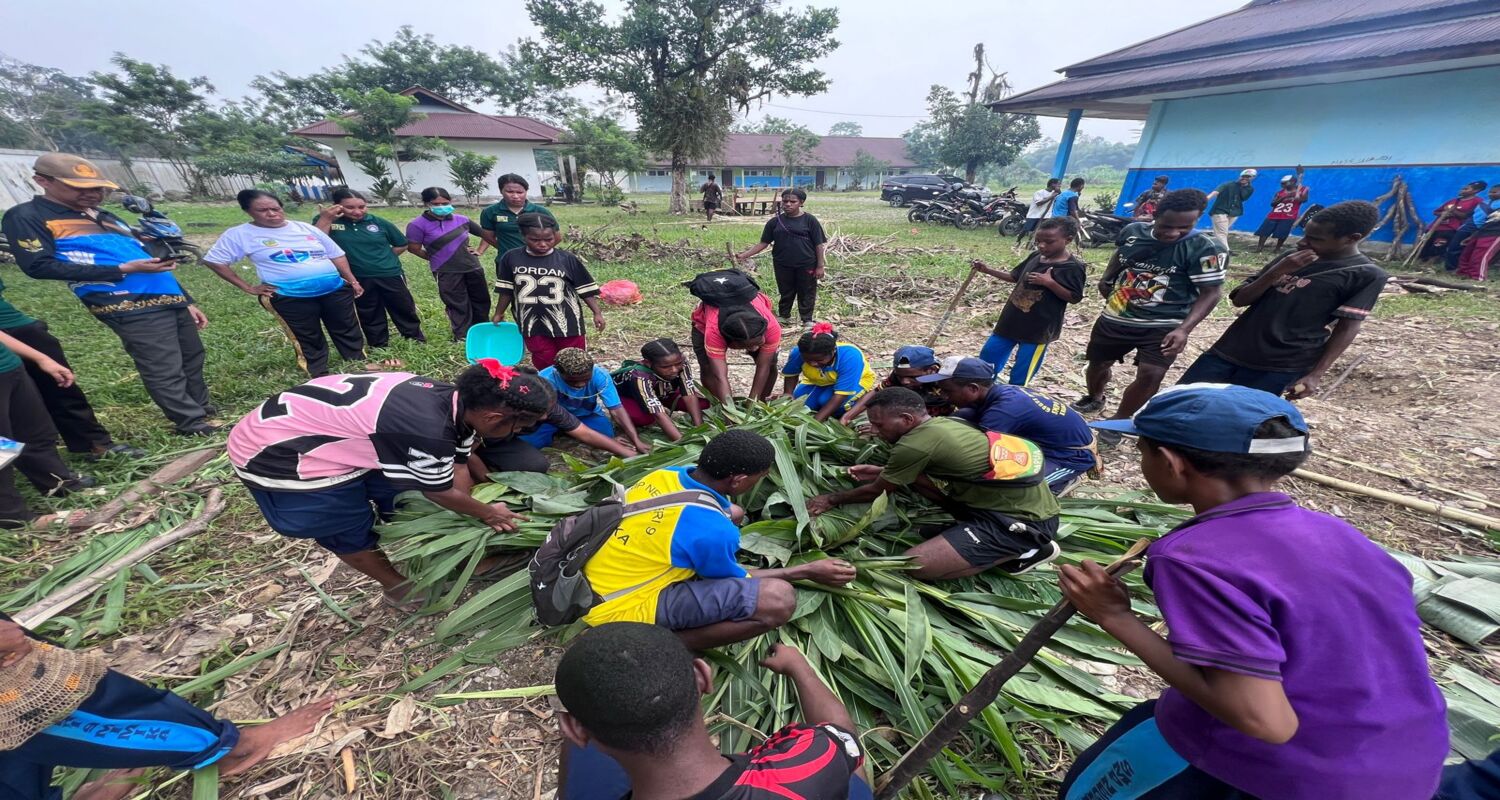
Timika – Thin wisps of smoke rose from the schoolyard of SMP Negeri 9 Mimika in Kwamki Narama District. Stones were heated until they glowed red-hot, leaves were carefully arranged, and sweet potatoes and other food ingredients were placed on top. The school principal, Martha Welman Benamen, S.Pd., joined teachers and children in working alongside the YMH Papua Timika Tutor Team. Together, they took part in a tradition that has long brought Papuan communities together: bakar batu, the traditional stone-cooking feast.
In an area frequently affected by conflict, the scene was especially moving. Small hands helped carry leaves and arrange stones, while laughter broke through the drifting smoke. For a few hours, there was no fear and no division. There was only a sense of togetherness.
Once the stone-cooking mound had been covered and left to
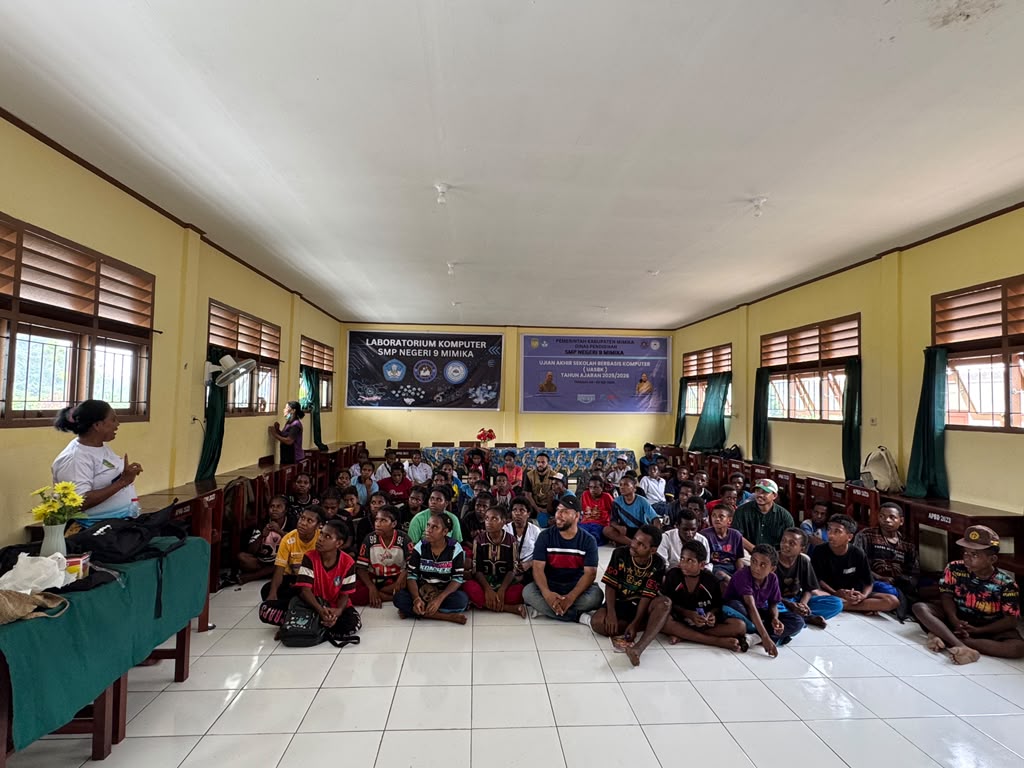
cook, everyone headed into the classroom. There, three tutors from Timika began
sharing their life stories. They were young Papuans who had pursued their
education abroad and had since returned home to serve their own communities.
Harnal Baliem Tabuni spoke about his journey at Cleveland
State University in the United States. He studied through the Papua Outstanding
Student Scholarship Program and earned a place on the Dean’s List for four
consecutive semesters. Jhon Cartenz P. Kreku, a geology graduate of the
University of Rhode Island in the United States, had previously served with the
Indonesia Mengajar movement in Weriagar, Teluk Bintuni. There, he helped 20
junior high school students improve their English scores by up to 50 percent.
Samuel Aleksander Mandowen received an Australia Awards Scholarship to pursue a
Master of Information Technology at Queensland University of Technology (QUT),
Australia, and is now a doctoral candidate in Russia.
The children listened with sparkling eyes. These were not fairy tales about people from distant places. These were stories told by fellow Papuans whose faces and accents were familiar to them, people who had once sat in simple school classrooms just like theirs. The message struck home: you, too, can reach the farthest corners of the world, starting from this very land.
The atmosphere grew more relaxed when the tutors invited the
children to play games. The once-quiet classroom came alive with cheers,
laughter, and an outpouring of enthusiasm.
Next, Harnal led a demonstration of Contextual Teaching and Learning (CTL). Rather than asking the children to memorize words from a textbook, he drew on an experience they had just shared: the bakar batu tradition. The children learned English vocabulary such as stone, fire, sweet potato, and leaves, then combined the words into simple sentences: “We cook sweet potatoes with hot stones” and “We eat together.”
This is the essence of CTL: learning from one's own life and
experiences. The unfamiliar words no longer felt distant because the children
had just touched the stones, smelled the smoke, and experienced the warmth of
togetherness. English no longer sounded foreign to them. It had become a
language that could tell the story of their own home.
When it was time to uncover the bakar batu, everyone returned to the schoolyard. The leaves were slowly lifted, releasing the aroma of the freshly cooked food across the school grounds. Martha Welman Benamen, the teachers, the children, and the tutor team sat together and enjoyed a shared lunch prepared over the same traditional cooking pit.
Amid the challenges of a region where life is not always
easy, that afternoon revealed something precious: a school can still be a safe
space where children learn, laugh, and dare to dream. Just as stones are
gradually heated until they can cook a meal, education that is patient and
rooted in children's everyday lives can nurture hope, even in the most
challenging places.
This activity was part of an English teacher training
program organized by the Central Papua Provincial Government through the
Central Papua Provincial Education and Culture Office. Under the program, YMH
Papua trained 90 teachers across Paniai, Mimika, and parts of Nabire. SMP
Negeri 9 Mimika demonstrates that innovation does not have to be expensive. It
can emerge from a community's own traditions, from a schoolyard, from glowing
embers beneath heated stones, and from the hearts of teachers who never stop
believing in their children.
(Timika Tutor Team – YMH Papua: Harnal Baliem Tabuni, Jhon
Cartenz P. Kreku, and Samuel Aleksander Mandowen)

Comments
Terima kasih anak"/ adik" hebat yang sudah melangkah kan kami di sekolah kami untuk membagi seberkas ilmu bagi anak" kami yang 99,9 %anak papua TYB ade" yg hebat' dsn profesional .. the best
Luar biasa, sangat menginspirasi, Tuhan memberkati SMP N 9 dan Yayasan Mutiara Hitam😇🙏🤗
Saya sangat apresiasi pembelajaran kontekstual di Kwamki Narama. Contoh nyata, siswa belajar bahasa inggeis melalui kegiatan bakar batu dengan mengenal nama bahan makanan dan peralatan dalam bahasa inggris pembelajaran ini membuat siswa lebih mudah memahami pembelajan sekali gus melestarikan budaya Papua.🙏🙏
Add New Comment