 English
 Indonesia
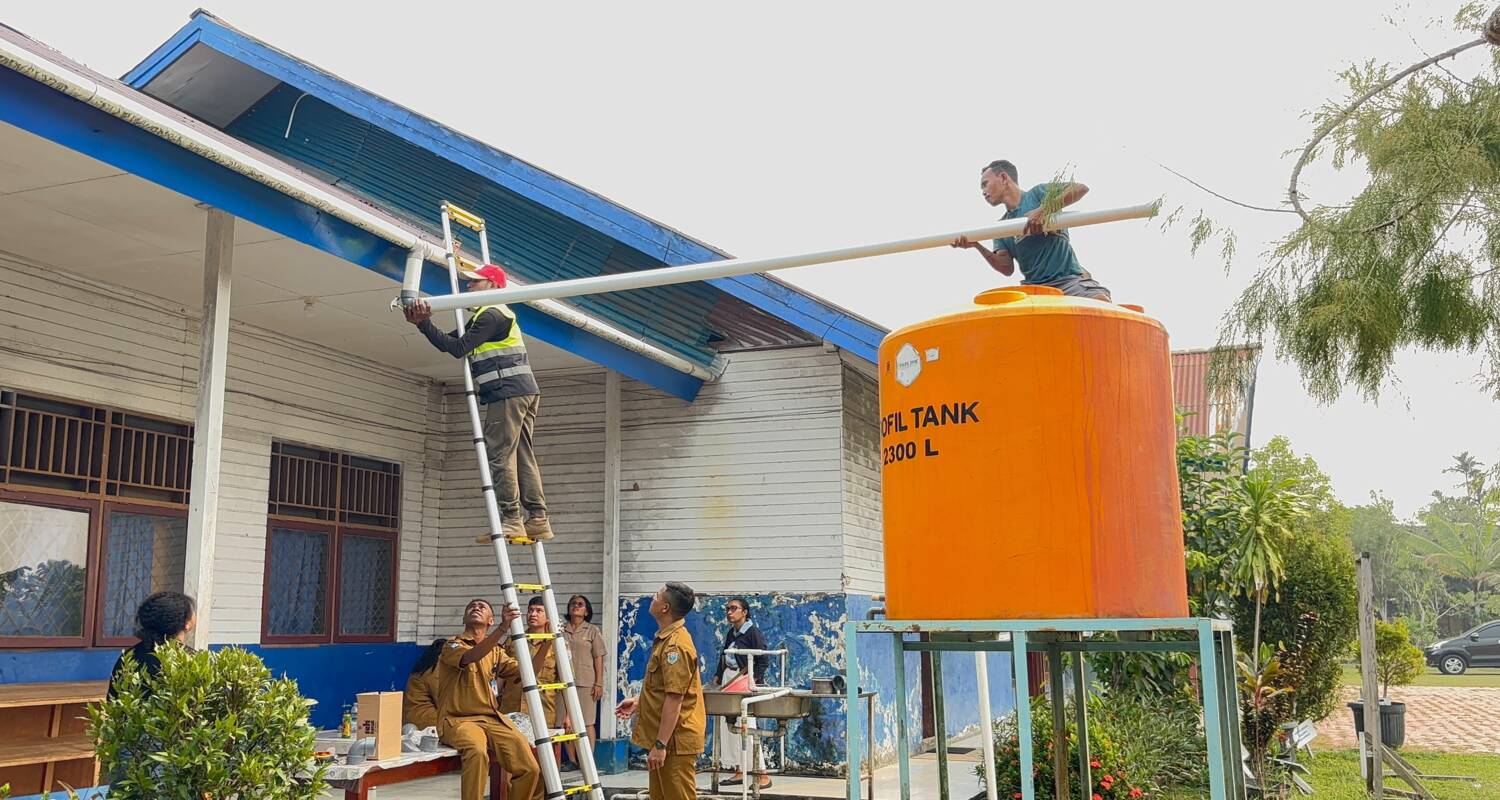
The foundation’s Board of Supervisors expressed appreciation for the support from the school principal and teaching staff; the activity was conducted amid drought conditions influenced by the El Niño phenomenon in Nabire.
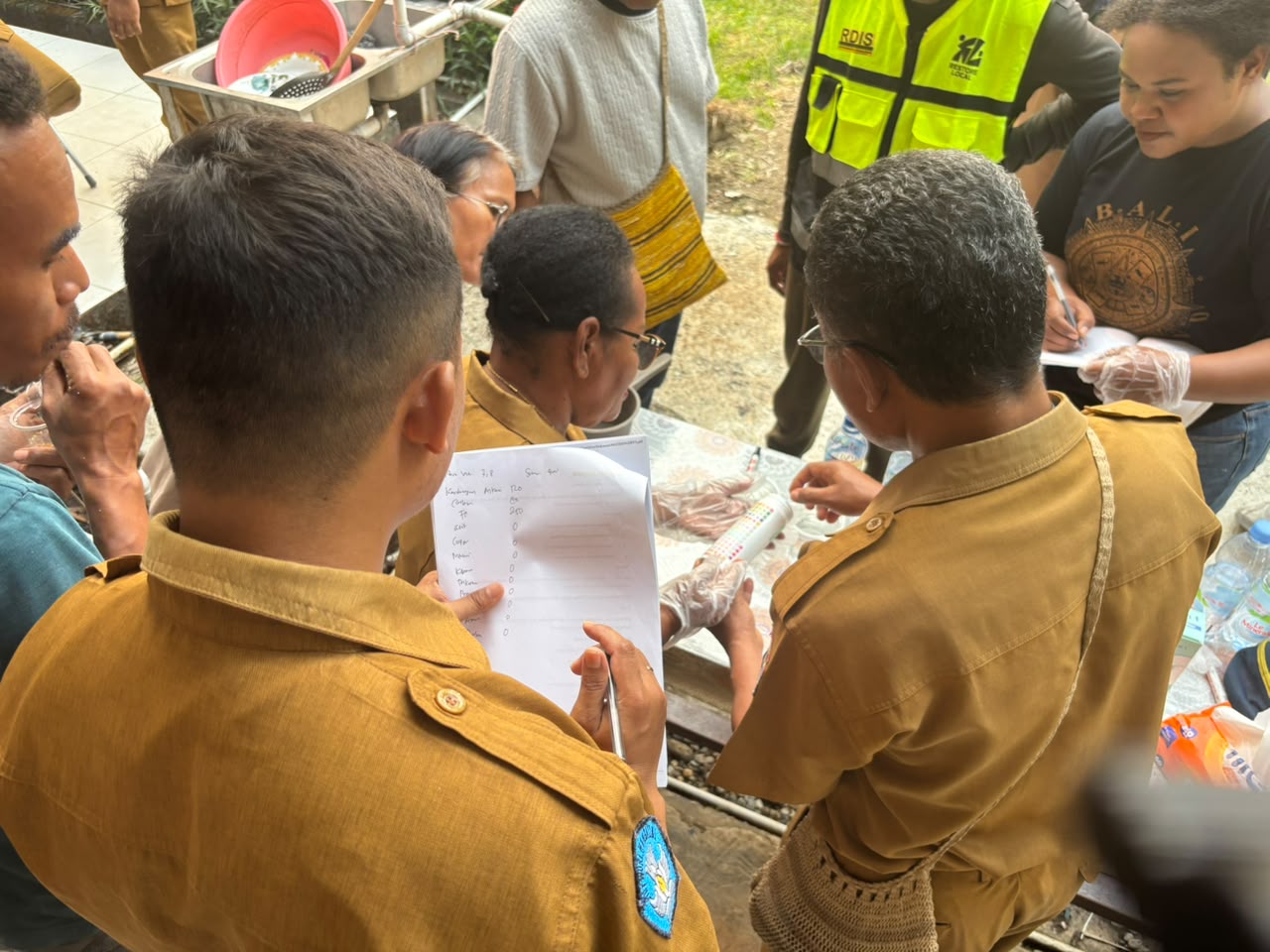
NABIRE, Central Papua — Yayasan Mutiara Hitam Papua (YMH Papua), in collaboration with Black Pearl Network (BPN) Australia, trained 20 teachers from SMA Negeri 1 Plus KPG Nabire to assess water quality and install a rainwater harvesting system to support clean water availability at the school. The activity was conducted through a Clean Water Installation Workshop held in two stages at the school on Friday (11/9/2026) and Monday (14/9/2026).
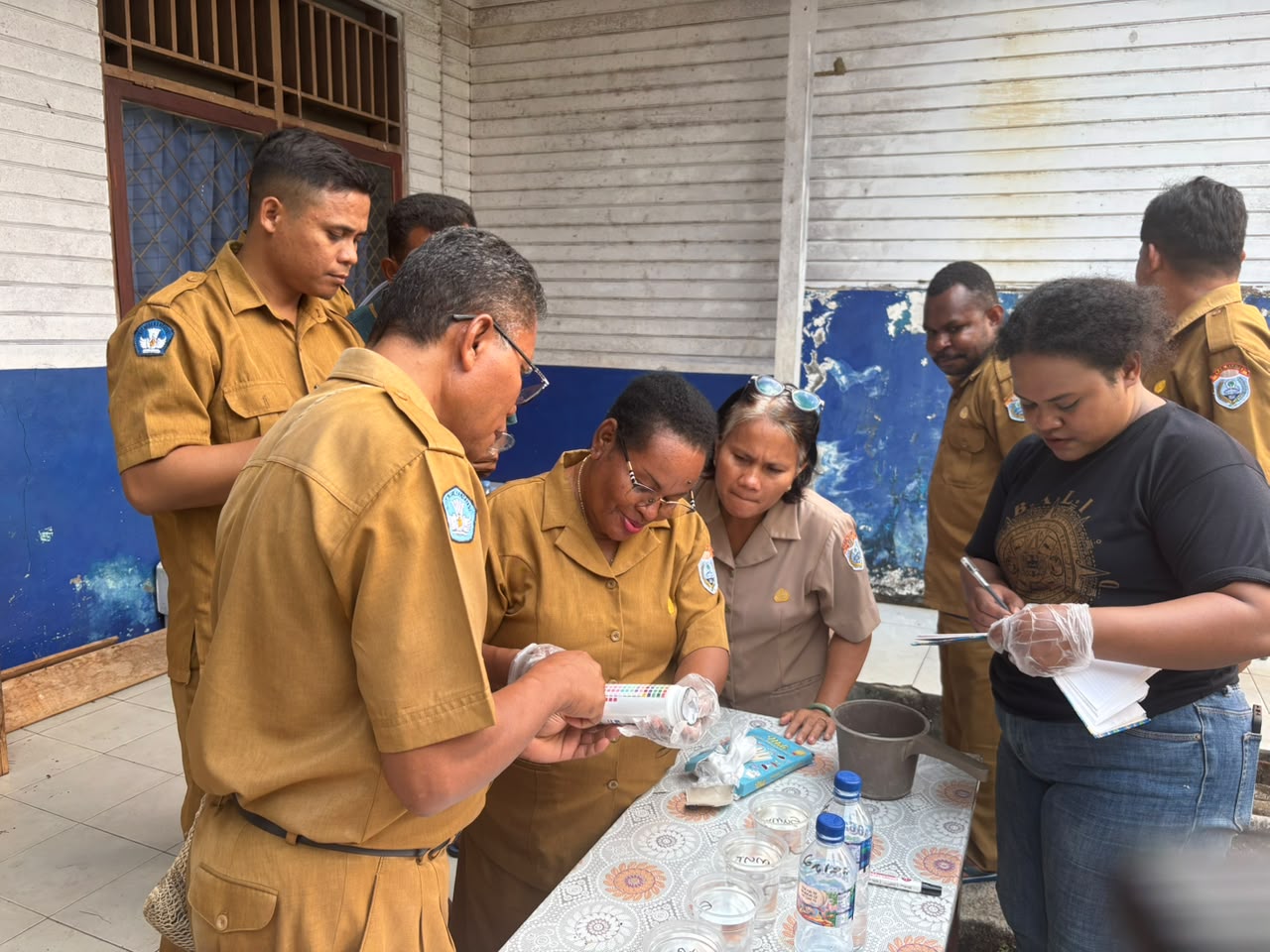
The first stage consisted of socialization and water quality analysis, while the second stage involved hands-on field installation practice at the school located in Bumi Raya Village, West Nabire District.
The training was conducted shortly after the Nabire Regency Government responded to drought conditions influenced by the El Niño phenomenon in late August 2026. The local government established an El Niño Response Task Force to address the impacts of declining clean water availability and food security. The Nabire Regional Disaster Management Agency (BPBD) recorded several forest and land fire incidents since July 2026 and distributed clean water supplies to affected areas. The local government also urged residents to conserve water following declining water availability.
YMH Papua Board of Supervisors R. Kafiar, M.Kp., expressed appreciation to the school for its support throughout the activity. According to him, the willingness of the school principal and teachers to host the program and participate directly in the installation process represented the kind of support needed by the foundation at the community level. He hoped that the knowledge gained by the teachers would be passed on to the students.
The Principal of SMA Negeri 1 Plus KPG Nabire, Fransiscus D. B. Johanes, S.Pt., M.MPd., together with the teaching staff, expressed full support for the activity from the preparation stage. The school provided activity facilities and installation locations, and assigned 20 teachers to participate in all training sessions until completion.
The participants were selected from among teachers rather than students, with sustainability considerations in mind. Teachers were considered the appropriate parties to manage and maintain the school’s water facilities over the long term while transferring the knowledge to students. SMA Negeri 1 Plus KPG Nabire is a public school that plays a role in developing future educators from Papua, with students coming from various customary regions in Central Papua and most residing in dormitories.
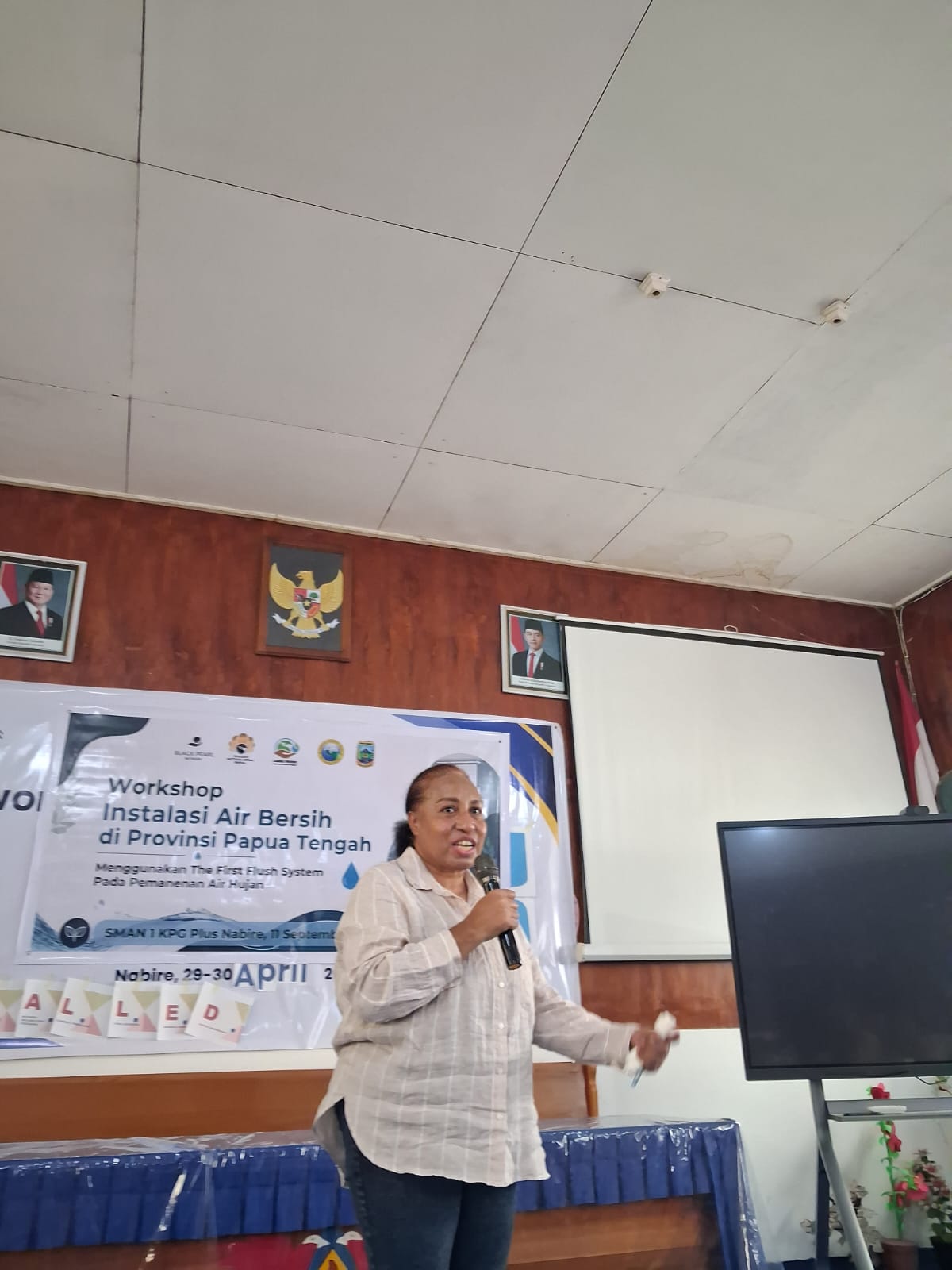
The training materials were delivered by Ribka Yoteni, S.T., a technical staff member of YMH Papua. The civil engineering graduate from Papua had previously received direct training from Dr. David Scott, a water specialist from BPN Australia. During the socialization stage, participants were introduced to the characteristics and risks of several commonly used water sources, including groundwater, bottled water, and rainwater, as well as simple methods for assessing water quality.
The activity was also attended by Chairperson of Yayasan Mutiara Hitam Papua Mina V. Sarwom, SP, and YMH Papua Clean Water Program Manager Jerry Simunpendi.
During the practical session, participants installed a First Flush System. The system functions to separate the initial rainwater runoff from the roof surface, which may contain leaves, dust, and other contaminants, before directing subsequent rainfall into the storage tank.
The system operates without machines or moving components, making it relatively simple to operate. However, regular inspection and cleaning are still required to maintain its performance. YMH Papua explained that the installed system aims to improve clean water availability and quality through rainwater utilization. Stored rainwater still requires quality testing and further treatment in accordance with applicable standards if it is intended for consumption.
The foundation also emphasized that the tank support structure must be strong because a 1,000-liter tank weighs approximately one ton when fully filled. The installation was carried out by participants under the guidance of technical personnel, following the foundation’s approach of prioritizing skills transfer to local communities as the main objective of the training.
Climate data from Nabire for the 2007–2020 period recorded an average annual rainfall of approximately 4,815 millimeters, with 209 rainy days and no dry months. Based on theoretical calculations, a roof area of 50 square meters has the potential to collect around 240,000 liters of rainwater annually. This potential indicates that the main challenge is not only rainfall availability, but also how water can be collected, stored, managed, and utilized sustainably.
The clean water program is one of YMH Papua’s oldest initiatives and is rooted in a partnership between Gereja Kristen Injili (GKI) in Tanah Papua and the Uniting Church in Australia Synod of Western Australia. According to the foundation’s records, the collaboration began in 2008 through discussions on social issues in Papua with BPN Australia, continued in 2013 through a clean water program with Lembaga Air Kehidupan (LEMAK), and has been managed directly from Papua since 2020 following the establishment of YMH Papua. The foundation received legal recognition on 3 November 2020 and is based in Nabire. The Clean Water Training Program is one of the foundation’s seven programs.
The activity aligns with the development priorities of the Central Papua Provincial Government. Governor Meki Nawipa has identified improving human resource quality and strengthening basic education and health services as key focuses of the 2025–2029 development agenda. In December 2025, the provincial government also launched a free education program for senior high schools and vocational schools, along with support for dormitory managers in religious-based institutions and remote, disadvantaged, and frontier areas (3T).
According to YMH Papua, this division of roles represents a collaborative effort in which the government expands access to education, while non-government organizations complement these efforts by supporting students’ living conditions, including access to clean water facilities in schools and dormitories.

Add New Comment